



How to Keep a Sports Betting Record That Shows What You’re Actually Doing
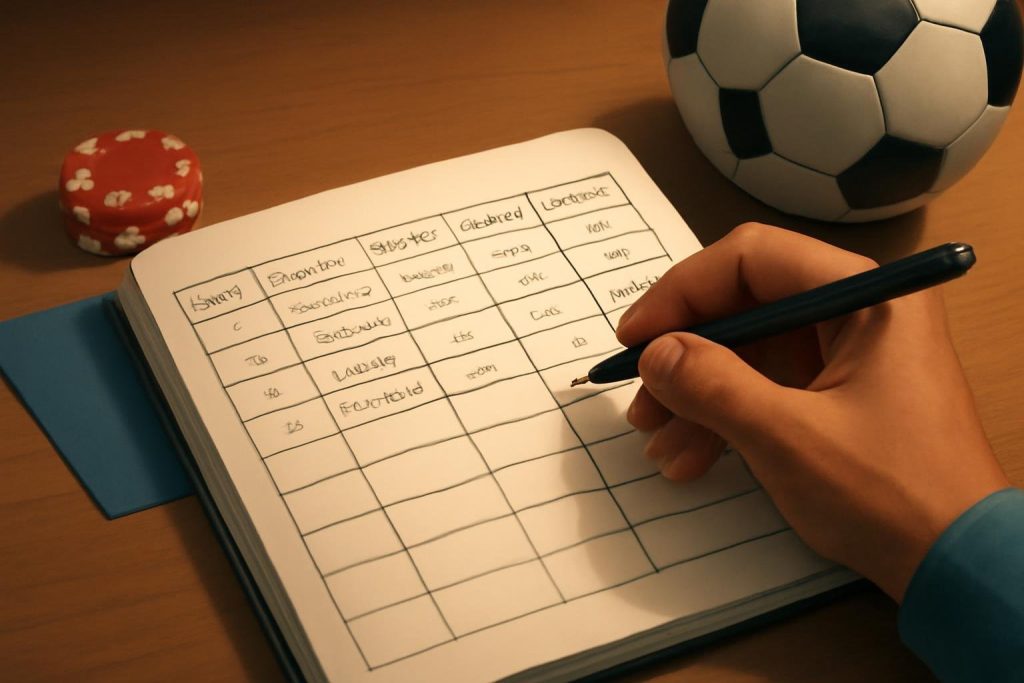

You place a bet at 2.10, your team wins, and the payout feels like a useful result. But one winning ticket doesn’t tell you much about your decisions. A simple betting record helps you see what you staked, what came back, and whether your results are being shaped by prices, habits, or short-term luck.
The goal isn’t to find a magic pattern or turn betting into an income plan. It’s to keep a clear account of activity and make it easier to stick to limits. You can use a spreadsheet, a notes app, or paper. Consistency matters more than the tool.
Record the bet before the result
Write down each wager when you place it. If you wait until after the game, it’s easy to forget the exact odds, misremember your reasoning, or leave out bets that didn’t go well.
For each entry, include the date, event, market, odds, stake, and the result. Add the bookmaker or platform if you use more than one, and note whether the bet was settled, voided, or still open. A short note about your reason for placing it can be useful too. Keep that note specific: “price looked higher than my estimate” is more informative than “strong feeling.”
- Stake: the amount risked, not the possible payout.
- Odds: the price shown when you placed the bet.
- Return: the total amount credited after settlement, including the original stake when applicable.
- Net result: return minus stake, or the stake lost if the bet loses.
If you need a refresher on how prices relate to implied probability, see how to read sports betting odds and bookmaker margin. Recording the odds as well as the outcome makes later comparisons much more useful.
Keep returns separate from profit
Suppose you stake $10 at decimal odds of 2.10 and the bet wins. The total return is $21, which includes your $10 stake. Your net profit is $11. If you enter $21 as profit, your totals will overstate the result.
A spreadsheet can calculate the net result with a simple rule: for a win, return minus stake; for a loss, negative stake; for a void, zero net result and the returned stake. Check how the operator settled the wager, since rules can vary by market and event.
Then total the stakes and net results for a chosen period. You can also calculate return on stake by dividing net profit or loss by total stakes, then multiplying by 100. Treat that figure as a description of the period, not proof of what will happen next. A short run of results can swing sharply, particularly when bets have different odds.
Use notes to spot process problems
When you review your record, look for concrete patterns rather than trying to explain every win or loss. Did you place bets outside your planned budget? Did you regularly forget to record losing wagers? Were you choosing a market because you understood it, or because it was available and caught your attention?
You might also group entries by sport or market, but only if you have enough consistent records for the comparison to mean anything. A handful of bets is not a dependable basis for judging a strategy. Don’t change your approach just because one small group happened to win.
For broader habits to check, these beginner betting tips offer a useful starting point. The record itself should stay neutral: write down what happened without adjusting the entries to make the decisions look better.
Build limits into the record
Set a spending limit before placing bets and record it alongside your activity. You can track the amount deposited, withdrawn, and wagered separately; they measure different things. A deposit is not a loss by itself, and a withdrawal is not a measure of betting skill.
Make the review routine brief. For example, choose a regular time to check that entries are complete and compare your activity with the limit you set. If you’re tempted to raise the limit after a loss or keep betting to recover money, pause rather than treating the spreadsheet as a reason to continue. A record is there to make choices clearer, not to justify chasing losses.
Make the record useful, not elaborate
Start with a few fields you’ll actually fill in. Add more only when they answer a real question. If you want to compare your decisions with the prices available later, you could record the later odds separately, but don’t confuse a price movement with a guaranteed verdict on your original bet.
Keep every wager in the log, including the inconvenient ones. At review time, check the arithmetic, note any missing information, and compare your activity with your preset limits. That small routine gives you a more honest picture than memory can, and it can also make it easier to decide when not to bet.